
Overview
Two of the most practical activities a neighbourhood association can undertake are litter and beautification clean-ups and Neighbourhood Watch coordination. Both have clear, visible results, require relatively modest organization, and tend to build participation across a wider demographic than meetings alone. This article covers the logistics of each.
Planning a litter clean-up event
Notify the municipality first
Before any organized clean-up on public land, contact your city's parks or public works department. Most Canadian municipalities have a formal "Adopt-a-Street" or "Adopt-a-Park" process that registers your group and arranges for bag collection after the event. This step also provides liability coverage in many cases and ensures the city removes the collected material.
Key questions to ask the municipality:
- Who collects the filled bags, and when?
- Are gloves and bags supplied, or does the group need to source them?
- Are there areas to avoid (e.g., sites with potential contamination, active road work)?
- Does the group need any permit to gather in a public park?
What to prepare for participants
- Heavy-duty garbage bags (the municipality may supply these)
- Nitrile or latex gloves for each participant
- Litter pickers / grabbers for sharps and glass
- High-visibility vests for anyone working near roads
- First aid kit
- A map of assigned zones divided among sub-groups
- Disposal instructions for hazardous items (needles, batteries)
Select a date and time
Weekend mornings in late spring or early autumn are typically the most productive for clean-up events in Canada, given daylight hours and temperature. Avoid dates that conflict with major local events. A two-hour window (e.g., 9 a.m. to 11 a.m.) is sufficient for a block-by-block clean-up in most residential areas.
Recruit and organize volunteers
Divide the target area into manageable zones and assign a zone captain to each. Zone captains are responsible for distributing materials to their group, monitoring safety, and collecting filled bags at the designated drop point. Recruit more volunteers than you expect to need — attrition on the day is common.
Children can participate in clean-up events under close adult supervision on sidewalks and parks, but should not be in proximity to roads, active lanes, or areas where sharps may be present.
Handling hazardous materials
Volunteers should not pick up syringes, chemical containers, or other potentially hazardous items by hand. Instruct participants to mark the location (a photo and GPS pin is sufficient) and report it to 311 or the equivalent city line. Some municipalities supply sharps containers and briefings through their harm reduction teams for events in areas where discarded needles are a concern.
Greening and beautification projects
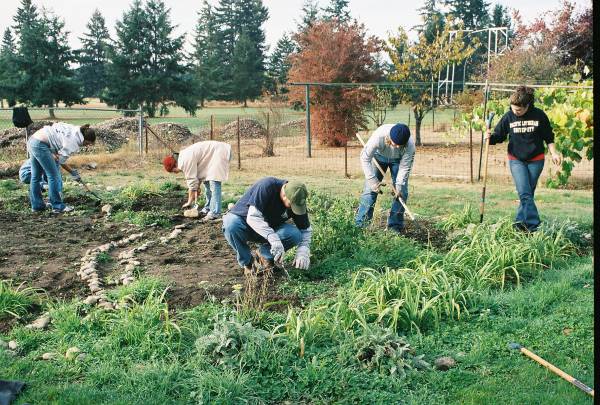
Beyond single-day litter collection, many neighbourhood associations coordinate longer-term greening efforts: tree planting, community gardens, boulevard maintenance, and mural projects on otherwise blank walls.
Tree planting
Most large Canadian municipalities have formal urban forestry divisions that supply trees for planting on city property at low or no cost. Applications typically open in late winter for spring planting. Residents who want trees on their boulevards or in city parks should apply through this channel rather than sourcing and planting independently, as unauthorized plantings may be removed.
Edmonton's Urban Forestry division and the City of Toronto's Tree Planting page both describe application processes in detail.
Community gardens
Starting a community garden on city-owned land requires a long-term agreement with the municipality, typically a formal licence for use of the land. The association becomes responsible for maintenance and must carry liability insurance. Many municipalities have a waiting list for community garden sites; the first step is to register interest with the parks department.
Neighbourhood Watch in Canada
Neighbourhood Watch is a crime prevention arrangement where residents agree to look out for suspicious activity in their area and report it to police through established channels. It does not involve patrolling, confrontation, or surveillance beyond what any resident would normally observe from their home or while going about daily activities.

Registering with local police
In Canada, Neighbourhood Watch groups register with their local municipal or regional police service. The national coordination body is Neighbourhood Watch Canada, which maintains a directory of provincial and local contacts. Registration typically involves:
- A meeting or call with the community policing officer for your area
- Completing a registration form with the block captain's contact information
- Receiving Neighbourhood Watch signage for your block
- Agreeing to follow police guidelines on what to report and how
Block captain responsibilities
The block captain is the primary point of contact between residents on a specific block and the police community liaison. Their role involves:
- Distributing contact information to neighbours who wish to participate
- Circulating police-issued community safety bulletins
- Reporting patterns of suspicious activity (not individual incidents, which residents report directly) to the community policing officer
- Welcoming new residents and explaining the Neighbourhood Watch arrangement
The block captain does not have any enforcement authority and should not attempt to confront or detain individuals. All concerns about immediate safety should be directed to 911.
CPTED principles
Some neighbourhood associations incorporate basic Crime Prevention Through Environmental Design (CPTED) principles into their work. CPTED examines how the physical environment affects the likelihood of crime. Common recommendations relevant to residents include: trimming overgrown hedges that obscure sightlines to front doors, ensuring adequate street lighting, and maintaining laneways to reduce concealment opportunities. Many police community policing units offer free neighbourhood CPTED assessments on request.
Social programmes
Block parties, seasonal markets, and community barbecues build the social cohesion that makes both clean-up events and Neighbourhood Watch more effective — neighbours who know each other are more likely to notice and report anomalies.
Organizing a block party on a public street requires a temporary road closure permit from the municipality. Most cities have a streamlined process for resident-organized events; application deadlines are typically 30 to 60 days before the event date. The association is usually required to carry event liability insurance for the duration, which is available through brokers specializing in non-profit or community event coverage.
Further reading
- Neighbourhood Watch Canada — registration and provincial contacts
- RCMP — Neighbourhood Watch — federal overview of the programme
- Volunteer Canada — volunteer management resources for community events
- Health Canada — Injury Prevention — safety guidelines relevant to outdoor volunteer events